To Save a Life: A Designer's Review of the 3D Layered SVG
As someone who spends most of their day staring at digitized files and analyzing stitch paths, I approach new design assets with a healthy dose of skepticism. We have all seen beautiful previews that turn into a tangled mess on the machine. However, when I first opened the file for To Save a Life - 3D Layered Laser SVG, my initial reaction was one of genuine appreciation for the structural integrity of the vector lines. While this product is categorized under Other Celebrations and explicitly marketed for Laser Cutting, my mind immediately went to how these bold, layered shapes could translate into a high-impact machine embroidery design for a custom apparel project.
First Impressions: Mood and Structural Potential
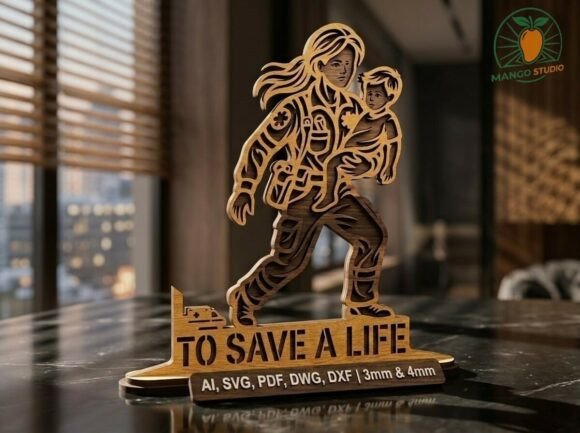
The visual personality of this design is undeniably heroic and emotional. It depicts a female paramedic, a figure of strength and compassion, rendered in a style that relies heavily on clean silhouettes and distinct layering. For an embroidery designer, this is promising. The lack of overly intricate, hair-line details suggests that this embroidery file would hold up well even when scaled down slightly, provided the digitizer respects the original vector boundaries. The mood it creates is serious yet uplifting, making it a perfect candidate for tribute pieces or professional branding for medical personnel.
When I imagine this as a finished product, I don't see it as a delicate, lacy addition. I see it as a statement piece. The "3D" aspect mentioned in the title translates beautifully to embroidery through the use of varied stitch density and potentially foam padding or layered appliqué techniques. The strong lines suggest that a combination of satin stitch for the outlines and a dense fill stitch for the solid areas would create a tactile, premium feel that customers love to touch.
Real-World Application: The Custom Tote Scenario
Let's walk through a realistic scenario where I would deploy this design. Imagine a local fire department or a private ambulance service looking for a personalized gift for their retiring lead paramedic, or perhaps a boutique shop owner wanting to create a line of supportive merchandise. I would choose a heavy-weight canvas tote bag design or a structured twill cap as the base.
In this context, To Save a Life - 3D Layered Laser SVG shines because of its clarity. On a textured canvas tote, fine details often get lost or cause puckering. However, the bold shapes in this file are robust enough to stand out against the fabric texture. If I were stitching this for a client, I would likely treat it as an applique design. By cutting the layers from contrasting fabrics—perhaps a deep navy for the uniform and a bright red or white for the medical insignia—I could mimic the "laser cut" precision using fabric edges. This approach not only honors the original intent of the Laser Cutting format but also adds durability to the handmade product.
The customer reaction to such a piece would likely be overwhelmingly positive. There is a growing market for items that honor essential workers, and a design that looks professional rather than cartoonish adds significant value. It builds customer trust because it shows that the creator cares about the subject matter and the quality of the presentation.
Navigating Technical Challenges and Fabric Choices
While the design is strong, practical judgment requires us to look at where it might struggle. If you are planning to use this on stretchy fabrics like a thin jersey sweatshirt embroidery project, you need to proceed with caution. The solid fill areas implied by the design's style can be heavy. Without the right stabilizer, you risk distorting the garment or causing the stitches to sink into the knit.
I would strongly advise testing this on scrap fabric first, especially if you are working with dark fabrics where thread contrast is critical. The interplay of light and shadow in the original 3D concept needs to be replicated through your choice of thread colors. A flat, single-color execution might lose the depth that makes the original SVG so striking. Consider using variegated threads or carefully planned shading to maintain that dimensional look.
Another area to watch is the hoop size. While the design looks scalable, shrinking it too much for a small pocket on a baby onesie (baby embroidery) could merge the separate layers, turning distinct elements into a muddy blob. Always check the minimum recommended size before committing to a custom apparel run. Furthermore, if you are attempting this on a curved surface like a cap, ensure your digitizing software has accounted for the push and pull of the fabric; the sharp corners of the paramedic's gear might need slight rounding to stitch out cleanly without bird-nesting.
Commercial Viability and Brand Consistency
For Etsy sellers and craft business owners, the versatility of this file is a major asset. It fits seamlessly into niches ranging from holiday embroidery gifts for First Responders Day to year-round boutique branding. The professionalism of the silhouette ensures that it doesn't look like a generic clip-art job, which helps in commanding a higher price point for your small shop product.
However, a crucial note on licensing: Since this is sold primarily as a vector for laser cutting, you must confirm the license terms before selling finished embroidered items or digital embroidery versions. Just because you can convert it doesn't always mean the commercial rights extend to thread-based reproduction. Always verify this to protect your business.
From a marketing standpoint, this design offers excellent potential for printable mockups. The strong graphic nature photographs well, allowing you to create compelling social media content that highlights the texture of the stitches against the fabric. Whether you are creating an embroidered patch for a uniform or a decorative pillow cover for a waiting room, the visual appeal remains high.
Final Verdict for the Practical Maker
In conclusion, To Save a Life - 3D Layered Laser SVG is a robust design that transcends its original medium. For the experienced designer, it offers a solid foundation for creating meaningful, high-quality commercial embroidery projects. It demands respect for fabric choice and stabilizer selection, but rewards that effort with a finished look that is both modern and timeless.
Before you start stitching, remember to review the stitch density settings in your software, ensure your hoop size accommodates the full spread of the layers, and perhaps run a test in black and white to check the clarity of the shapes. When executed with care, this design becomes more than just thread on fabric; it becomes a tribute that resonates with anyone who sees it. It is a prime example of how a well-constructed vector can inspire a truly exceptional embroidery project.